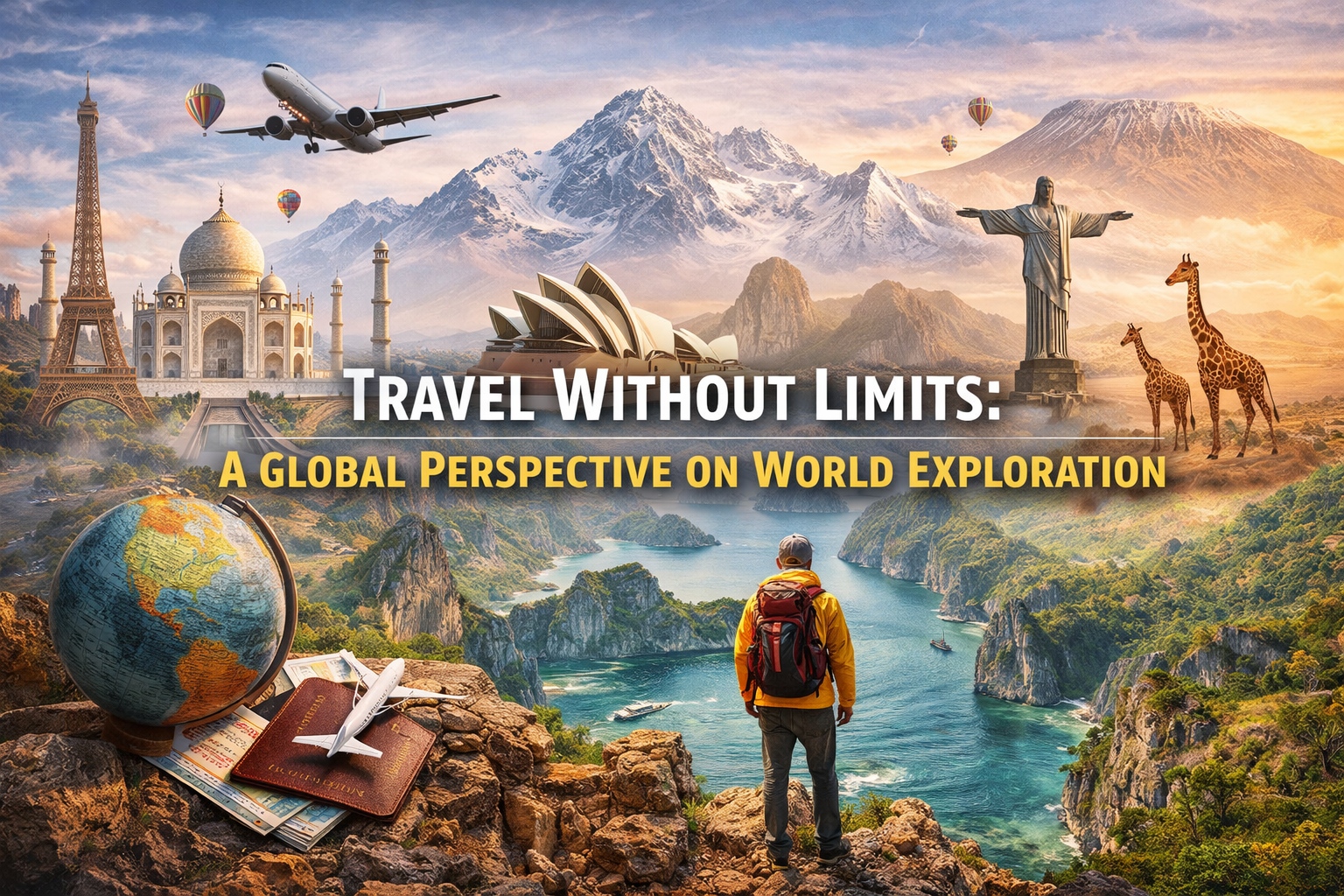
Travel Without Limits: A Global Perspective on World Exploration
2026-01-07
In an era defined by connectivity, mobility, and cultural exchange, travel has evolved beyond leisure into a powerful lens for understanding the world. “Travel without limits” is not merely a slogan—it is a mindset that challenges geographical, cultural, economic, and personal boundaries. From bustling global cities to remote rural landscapes, modern exploration invites individuals to engage with the planet in more inclusive, intentional, and transformative ways.
Redefining Borders in a Connected World
Globalization and technology have reshaped how travelers perceive distance and access. What once required months of planning can now be accomplished with a few digital tools—online visas, real-time translation, global navigation, and remote work platforms. As a result, borders feel less restrictive, and the concept of “far away” has been redefined.
However, travel without limits does not imply borderless irresponsibility. It requires awareness of local regulations, respect for sovereignty, and sensitivity to cultural norms. True global exploration balances freedom of movement with ethical engagement and informed participation in host communities.
Cultural Immersion Over Checklist Tourism
Modern travelers increasingly prioritize depth over breadth. Rather than rushing to tick landmarks off a list, they seek authentic experiences—learning local customs, sharing meals with residents, participating in traditions, and understanding historical context. This shift from consumption to connection allows travel to serve as a bridge between cultures rather than a superficial encounter.
Cultural immersion fosters empathy and dismantles stereotypes. When travelers engage meaningfully with people whose lives differ from their own, global perspectives expand. In this sense, travel becomes a form of informal education—one that no classroom can fully replicate.
Accessibility and Inclusion in Global Travel
A critical dimension of travel without limits is accessibility. Historically, global travel has been constrained by physical ability, financial resources, documentation, and social barriers. Today, progress is being made through adaptive tourism, inclusive infrastructure, and policy reforms that broaden participation.
Accessible accommodations, transportation for travelers with disabilities, budget travel innovations, and digital nomad visas are reshaping who gets to explore the world. While disparities remain, the global travel industry is increasingly acknowledging that exploration should not be a privilege reserved for a few, but an opportunity available to many.
Sustainability as a Non-Negotiable Principle
Unlimited travel does not mean unlimited consumption. Environmental and social sustainability are central to the future of global exploration. Climate change, overtourism, and ecosystem degradation have made it clear that travel must be managed responsibly.
Sustainable travel emphasizes low-impact transportation, support for local economies, conservation initiatives, and mindful consumption. Travelers without limits understand that preserving destinations is inseparable from enjoying them. Responsible exploration ensures that future generations inherit a world still worth discovering.
The Personal Transformation of Global Exploration
Beyond external landscapes, travel often reshapes internal ones. Exposure to different ways of life challenges assumptions, builds resilience, and cultivates adaptability. Navigating unfamiliar environments enhances problem-solving skills and emotional intelligence—attributes increasingly valuable in a globalized economy.
For many, travel becomes a catalyst for personal reinvention: career pivots, creative inspiration, or a renewed sense of purpose. The journey outward frequently becomes a journey inward, redefining success, happiness, and belonging.
A Shared Responsibility for an Open World
Travel without limits is ultimately a shared responsibility among travelers, governments, businesses, and communities. It requires policies that facilitate safe mobility, industry practices that prioritize inclusion and sustainability, and individuals who travel with curiosity, humility, and respect.
As the world continues to navigate geopolitical, environmental, and economic complexity, global exploration remains one of the most powerful tools for fostering mutual understanding. When approached thoughtfully, travel transcends recreation—it becomes a statement of global citizenship.
Conclusion
A global perspective on world exploration recognizes that travel is not about escaping reality, but engaging with it more fully. To travel without limits is to move through the world with openness, responsibility, and a willingness to learn. In doing so, exploration becomes not just a personal privilege, but a collective investment in a more connected, informed, and empathetic global society.